

How long does an employer keep time records? The federal period depends on the record type. Under the federal Fair Labor Standards Act (FLSA), employers generally preserve payroll records for at least three years. Records used to calculate wages—including time cards, work schedules, and wage-rate tables—generally have a two-year federal retention period. A company may need to keep records longer under state law, a contract, a tax rule, or a legal hold.
The federal minimum is a starting point, not a complete retention policy for every business record. The Department of Labor’s Fact Sheet #21 and 29 CFR §§ 516.5–516.6 distinguish record types and periods.
How long employer keep time records under the FLSA?
| Record type | Federal minimum | Examples |
|---|---|---|
| Payroll records under § 516.5 | At least 3 years | Records with required employee, wage, and payroll information |
| Time and wage computation records under § 516.6 | At least 2 years | Daily start/stop time cards, earnings sheets, and wage-rate tables |
| Other employment records | Depends on the rule | Agreements, notices, leave, safety, tax, or benefit documents may follow different requirements |

What the three-year period covers
Under 29 CFR § 516.5, employers preserve payroll records and specified other records for at least three years. Payroll information must be sufficient to show the information required by the applicable recordkeeping provisions. The exact required fields depend on the type of employee and applicable regulations, so a recordkeeping system should be checked against § 516.2 rather than reduced to a single saved pay stub.
The three-year federal period is measured from the relevant last date of entry or last effective date described in the rule. A business should apply a consistent policy that preserves the original record and any correction history, rather than silently replacing time entries. Keeping the record retrievable matters as much as retaining a file somewhere.
What the two-year period covers
Section 516.6 sets a minimum two-year period for certain time and earnings records used to calculate pay. Examples include basic time cards or sheets that record daily starting and stopping times, work or time schedules, and wage-rate tables. If the record also contains information that falls under a three-year category, keep it for the longer applicable period.
These periods are not permission to discard data that an employer needs to explain a payroll correction, answer an investigation, comply with a state rule, or preserve evidence for a dispute. A legal hold, agency request, claim, or company retention policy can require keeping records longer. When in doubt, have counsel or a qualified payroll professional review the applicable requirements before deleting records.
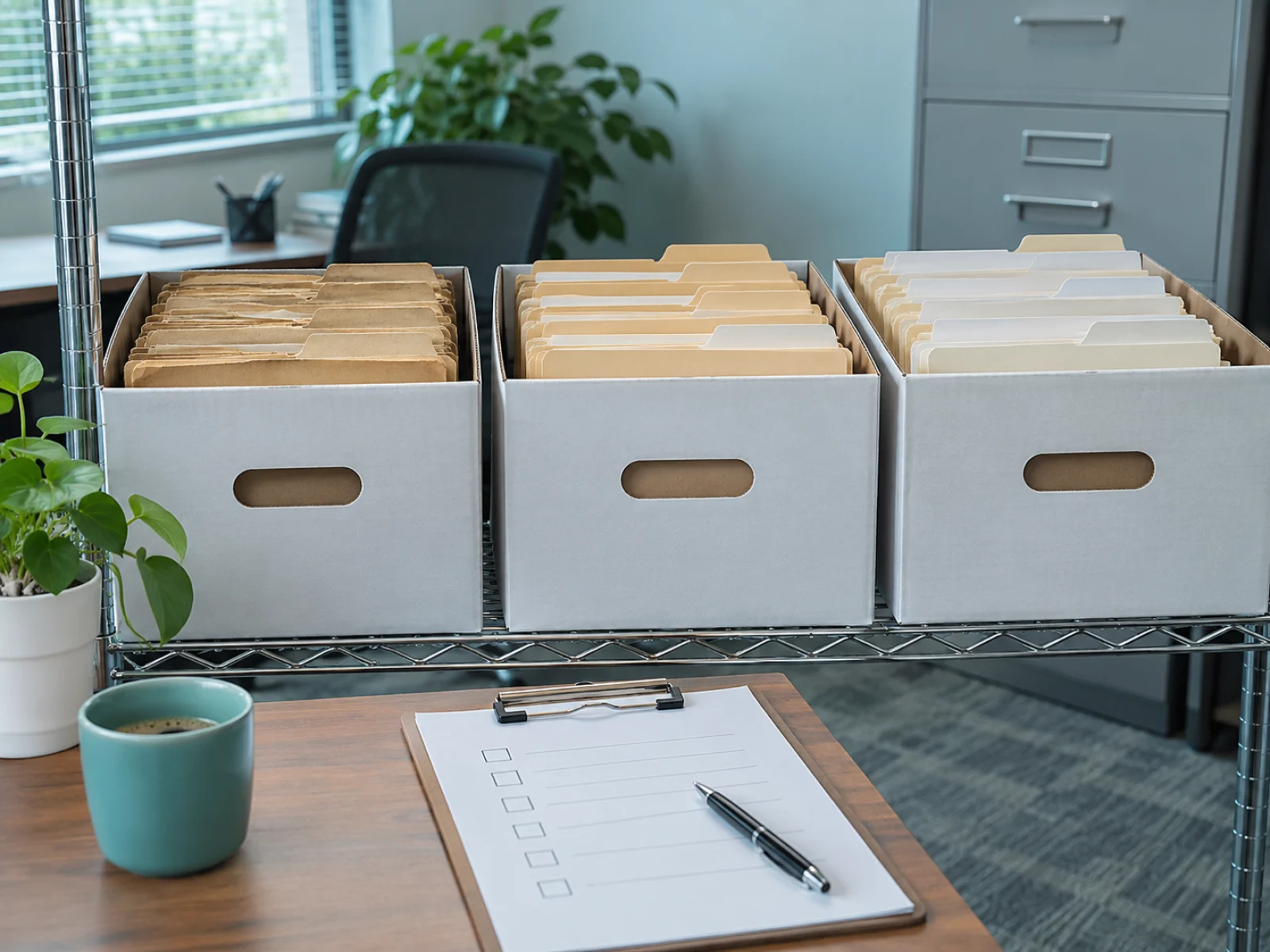
Which timekeeping records should a business organize?
Start with the records that explain what was worked and how pay was calculated. Depending on the workforce and pay system, this may include clock-in and clock-out times, daily and weekly totals, work schedules, rates of pay, additions or deductions, and payroll registers. Keep a clear connection between the source time entry and the resulting payroll record.
- List each record type and the rule or business purpose it supports.
- Assign a retention period that meets the longest applicable federal, state, contract, and tax requirement.
- Keep records searchable by employee, workweek, and pay period, with access limited to people who need it.
- Preserve correction history and supporting notes when an entry changes.
- Pause ordinary deletion when an audit, complaint, investigation, or legal hold applies.
The Time Card Calculator helps total documented work intervals; the Overtime Calculator can help review weekly arithmetic. The calculators do not determine retention obligations. For a broader overview, see U.S. work-hour and overtime basics and the guide to time-clock rounding.
Common record-retention mistakes
- Using one period for every document without distinguishing payroll from wage-computation records.
- Keeping pay summaries but discarding the source time records that support the calculations.
- Applying only the federal minimum without checking state, local, contract, tax, or industry-specific requirements.
- Deleting records automatically while a complaint, audit, investigation, or legal hold is pending.
- Keeping files but losing the employee, pay-period, or correction information needed to interpret them.

Frequently asked questions
Are timecards kept for two years or three?
Time cards used to calculate wages are generally listed among records with a two-year federal minimum under § 516.6. Payroll records are generally preserved for at least three years under § 516.5; keep longer when a record falls into another category or another rule requires it.
Does the FLSA set one period for every employee file?
No. The rules distinguish records by type and purpose. Personnel, tax, benefits, safety, and state-specific records may have different requirements.
Can an employer delete a timecard after two years?
Not automatically. A longer state or contractual period, pending investigation or claim, legal hold, or overlapping record category may require retention beyond the federal minimum.
What should a time record show?
FLSA-covered employers must maintain records with information required by the applicable regulations, including work-time and payroll details. Review current § 516.2 and agency guidance for the employee group and pay method.
Sources and last updated
Reviewed against U.S. Department of Labor Fact Sheet #21 and 29 CFR §§ 516.2, 516.5, and 516.6 on November 13, 2026. Check current state and local requirements before setting a deletion date.