

Does travel time count as work hours? Under the federal Fair Labor Standards Act (FLSA), ordinary travel between home and a regular workplace usually does not count. Travel that is part of the employee’s workday, such as moving between job sites, generally does. A special one-day assignment in another city and an overnight trip follow separate rules.
This guide explains the federal baseline in plain language. It does not decide every case: the type of trip, the employee’s normal schedule, duties while traveling, and state or local law can change the result. Employers should record hours actually worked and check applicable state requirements before finalizing payroll.
Does travel time count as work hours under the FLSA?
The FLSA’s travel rules distinguish commuting from travel that is part of the job. The Department of Labor’s Fact Sheet #22 summarizes the categories, while the current federal rules appear in 29 CFR §§ 785.35–785.39. The key question is what kind of trip the employee is taking and when it occurs.
- Normal home-to-work commute: usually not work time.
- Travel between job sites during the workday: generally work time.
- One-day assignment in another city: generally work time, less the employee’s ordinary commute and certain meal time.
- Overnight travel: time that overlaps normal working hours is generally counted under the federal rule; passenger travel outside those hours is treated differently.
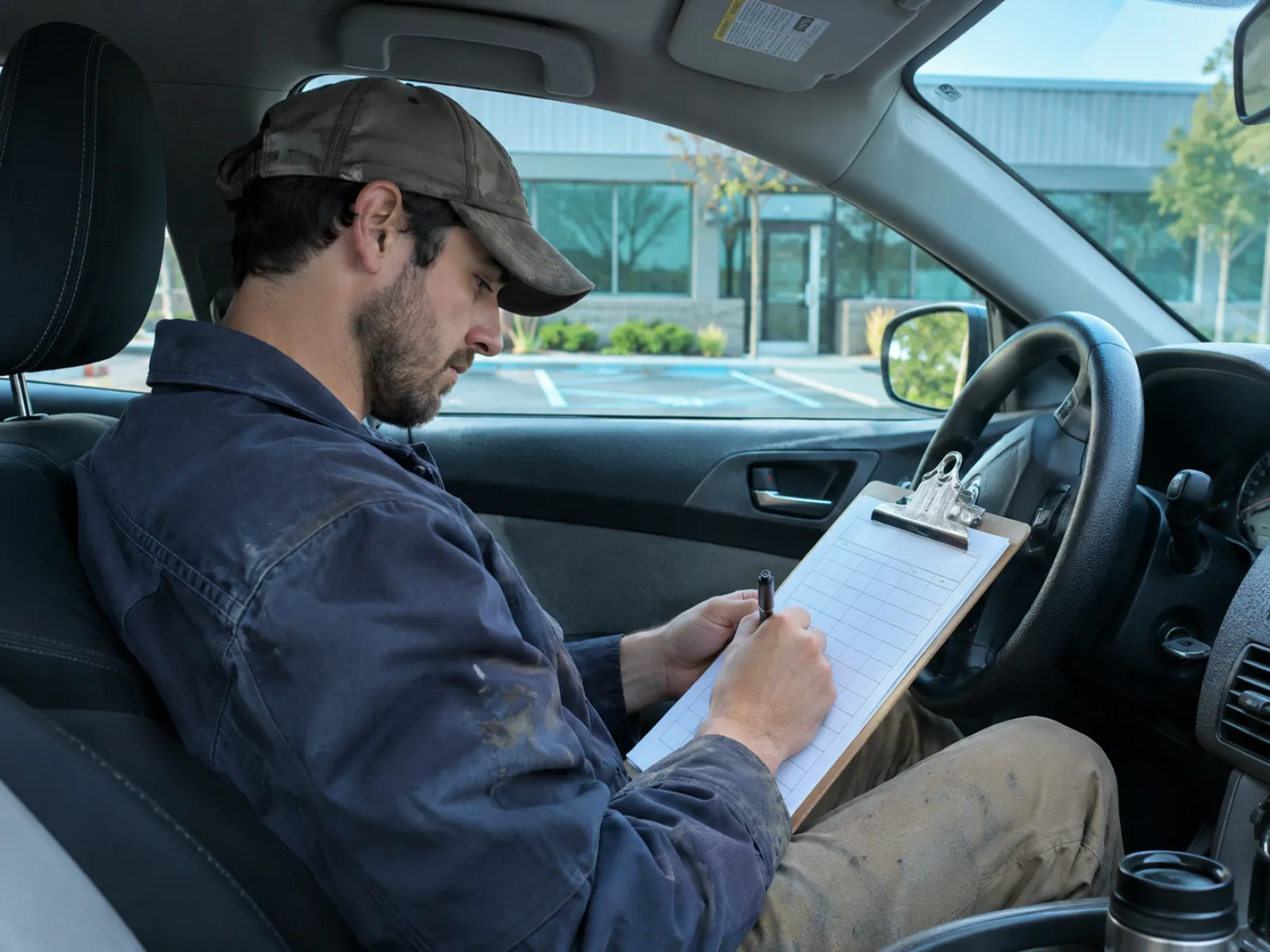
Ordinary commuting versus travel during the workday
Regular travel from home to the employee’s usual work location, and the trip home after work, is ordinarily commuting rather than hours worked. That generally remains true even if the employee travels a long distance. The FLSA rule focuses on the ordinary home-to-work trip, not the employee’s personal commute cost.
Once the workday has begun, travel from one work location to another is generally part of the day’s work. For example, if a technician reports to a shop, receives instructions, picks up tools, and then travels to a customer site, the trip from the required reporting point can be work time. The same principle generally covers an employee sent from one job site to another during the day.
How the day ends also matters. The regulation gives an example where an employee must return to the employer’s premises after a second job: that return trip is counted. If the employee is allowed to go directly home instead, the final trip may be an ordinary commute. Compare the facts with § 785.38 and keep the time record consistent with the actual route and instructions.
Special one-day assignment in another city
When an employee who normally works at a fixed location receives a special one-day assignment in another city and returns home the same day, the travel generally counts as work time. The employer may subtract the time the employee would normally spend commuting to the regular work site. The Department of Labor’s regulation also allows the employer to exclude meal time when the trip includes a meal period.
Hypothetical example: an employee normally spends 30 minutes commuting each way. A temporary assignment requires a two-hour trip each way to another city. The federal rule generally treats the assignment travel as work time but allows the normal commute time to be excluded; this illustration is not a payroll calculation for any particular person. The actual schedule, meal period, travel method, and state rules still need review.
Overnight business travel: use the normal work schedule
For travel that keeps an employee away from home overnight, the regulation generally counts travel time that occurs during the employee’s normal working hours. This can apply on a regular workday and during the same clock hours on a nonworking day. If the employee is driving, performing work while traveling, or required to perform duties during a trip, those facts can change the treatment.
As an enforcement policy, the Wage and Hour Division generally does not count time spent as a passenger outside regular working hours while traveling away from home by airplane, train, boat, bus, or automobile. That policy does not turn the entire trip into nonwork time. Review § 785.39 and Fact Sheet #22 for the boundaries.

What employers and workers should record
Record actual work time in a way that lets payroll distinguish the trip type. A useful entry identifies the date, start and end times, whether the employee drove or traveled as a passenger, the work locations, and any work performed en route. Note the regular schedule used to evaluate overnight travel. Do not replace actual entries with a planned itinerary when the trip changed.
- Identify the regular workplace and ordinary commute.
- Classify the trip: commute, jobsite-to-jobsite, special one-day assignment, or overnight travel.
- Note when the employee performed duties or was required to report, carry tools, or return to a work location.
- Compare overnight travel against the employee’s normal working hours.
- Apply state or local rules that may be more protective, then review the timecard before payroll.
Use the Work Hours Calculator to total an already-classified schedule, or the Time Card Calculator to check clock entries. The calculator helps with arithmetic; it does not decide whether a trip is legally compensable. For a related example, see how overnight shift hours are counted and the broader guide to U.S. work hours, overtime, and breaks.
Classify the trip before adding hours
Travel time has different categories. The federal baseline generally excludes ordinary commuting, counts travel between job sites during the workday, and applies separate tests to one-day special assignments and overnight trips. Identify the trip type first, then record the relevant interval; state law may differ.
Two hypothetical travel examples
Example 1 — special one-day assignment: A worker normally commutes 25 minutes each way. A temporary assignment requires 1 hour 40 minutes each way, plus a 35-minute meal. Total travel span is 3:20. The federal rule generally permits excluding the ordinary commute (0:50 total) and meal time where applicable: 3:20 − 0:50 − 0:35 = 1:55 illustrative work travel. Facts and duties matter.
Example 2 — overnight passenger trip: The employee's normal schedule is 8:30 a.m.–5:00 p.m. A train trip on a nonwork day runs 7:45–11:15 a.m. The overlap with normal work hours is 8:30–11:15, or 2:45. Under the federal overnight travel rule, travel during normal hours is generally counted; DOL enforcement policy treats passenger travel outside those hours differently. This does not resolve driving, work en route, or state rules.
Trip classification checklist
- Is the trip the ordinary commute, or travel after reporting for work?
- Is it between work locations during the workday?
- Is this a one-day special assignment away from the regular workplace?
- For overnight travel, what are normal working hours and passenger/driver status?
- Did the employee perform duties or have to report or return to a work location?
How to total classified travel time
- Open the work hours calculator after deciding which trip intervals count.
- Enter each compensable interval separately, including tasks and travel as needed.
- Use break fields only for actual excluded meal periods.
- Choose the correct week view and week start, then compare to dated travel records.
- The tool performs arithmetic; it cannot decide commute deductions, overnight travel rules, or compensability.
Common mistakes
- Counting the commute twice: identify the ordinary commute allowed for a qualifying assignment.
- Omitting worksite-to-worksite travel: keep the trip on the workday record and review the applicable rules.
- Calling all overnight travel unpaid: compare it with normal working hours and document duties or driving.
- Using an itinerary instead of actual travel: record actual departures, delays, arrival, and work.
- Asking a calculator to classify the trip: classify with official rules first, then total intervals.
Related: recording callback work during on-call periods.
Frequently asked questions
Does a long ordinary commute become work because it is unusually far?
Ordinary home-to-regular-work travel is generally commuting under the federal baseline; a special assignment follows a different test.
How should a one-day assignment be documented?
Keep the regular workplace, ordinary commute, trip times, meal interval, and any duties performed during travel.
Is an overnight passenger trip treated like driving?
Not always. Federal guidance distinguishes travel during normal working hours and applies a separate enforcement policy to some passenger travel outside them.
Can a timesheet calculator determine compensable travel?
No. Classify the trip using applicable rules first, then use the calculator only to total intervals.
Sources
- U.S. Department of Labor, Fact Sheet #22.
- 29 CFR § 785.35: Home to work.
- 29 CFR § 785.37: Special one-day assignment.
- 29 CFR § 785.38: Travel that is part of the day's work.
- 29 CFR § 785.39: Travel away from home.
Last reviewed: November 14, 2026. Federal baseline only; state law may differ. General information, not legal advice.